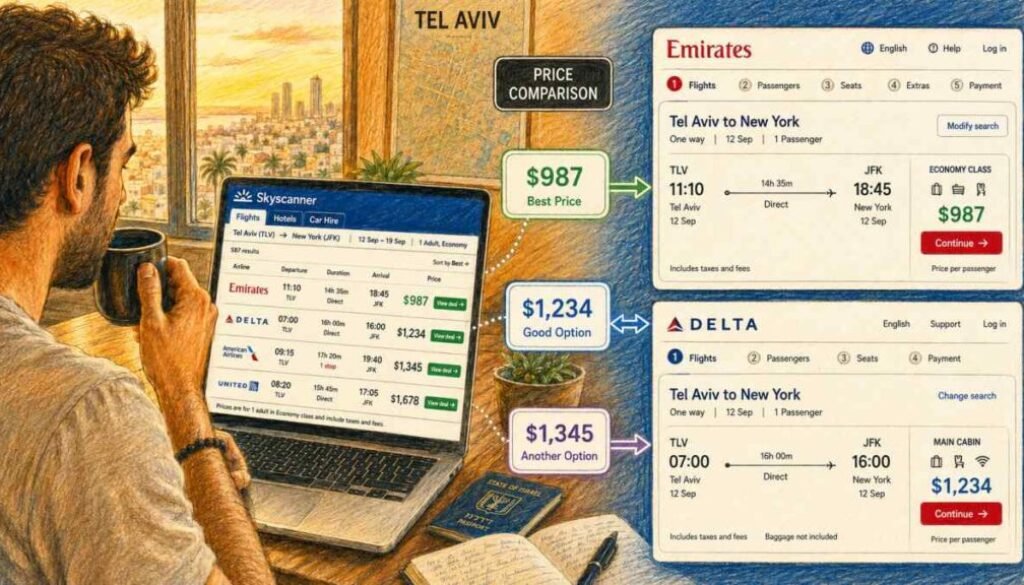
Search Engines vs Direct Booking: Where Should You Buy Airline Tickets?
When booking a flight, the question is always the same: should you search on Google Flights or book directly from the airline? The answer might surprise you: most of the time, the price is identical. Search engines integrate directly with airline booking systems in real-time. But here’s the catch—if you know where to look, you can save 10-40% on the same flight. The secrets? Price alerts, flexible date searches, and exclusive airline promotions. This guide reveals exactly when to use search engines and when to book direct, which option offers real advantages, and how to never miss a cheap flight deal again. By the end, you’ll understand the hidden benefits of each approach that airlines don’t advertise.
💡 Quick Fact: Skyscanner and Google Flights display identical prices to direct airline
websites 90% of the time—they’re integrated in real-time. But here’s the game-changer:
flexible date searches and price alerts can save you $200-400 on the same route.
That’s a 20-40% difference most travelers miss.
4 Major Advantages of Search Engines
Flight search engines (Google Flights, Kayak, Skyscanner) are the traveler’s best friend for budget bookings. First: speed and accuracy. In seconds, you see dozens of options with real-time pricing from all airlines. Second: price trend tracking—you see if prices are rising or falling over the next days, with visual graphs. Third: built-in smart features: “flexible dates” shows the cheapest option in your travel week, while “multi-city” compares different routing options. Fourth: price alerts—set a target price and receive emails when fares drop. This is game-changing for serious budget travelers.
3 Real Advantages of Direct Booking
But booking directly from airlines isn’t something to dismiss. First: complete security. Your ticket lives directly with the airline—no middleman, no third-party complications. Second: exclusive discounts—major carriers like United, Delta, and Lufthansa offer promo codes only on their own websites. Third: direct support—if problems arise, you speak directly to the airline’s customer service, not through a booking engine.
Practical Tips (5 bullet points):
🔍 Search in Incognito Mode: Airlines track return visitors and may raise prices. Use Incognito/Private browsing to see true base prices.
⚖️ Compare prices twice: Search on Skyscanner first, then check the airline’s site directly. Price differences of $20-50 per ticket aren’t uncommon.
🎒 Verify baggage policies: Search engines don’t always display complete baggage details. Check the airline’s website for clarity.
📲 Set price alerts early: Start alerts 2-3 months before your trip to catch price drops and seasonal patterns.
📅 Use flexible date searches: This tool often reveals cheaper alternatives 1-3 days before/after your preferred dates—sometimes saving $100+ per ticket.
FAQ
Q: Why are search engines free if they don’t charge consumers?
A: Search engines earn commissions from airlines every time you click “Book Now.” It’s a win-win partnership between platforms and carriers.
Q: Is it safe to book tickets through flight search engines?
A: Yes, completely safe—provided the site is secure (https://) and well-known. Always verify the airline and read reviews if you’re unsure.
Q: How far in advance should I book a flight?
A: Typically 6-8 weeks before departure. Prices are generally lower with advance bookings, though exceptions exist for last-minute deals.
Conclusion
Bottom line: Flight search engines are your most powerful tool for finding cheap flights, rapid price comparisons, and smart booking strategies. Direct booking is ideal when you have airline-specific promo codes or need dedicated customer support. The real winning strategy? Start with Google Flights to track trends and explore flexible dates, then check the airline’s website directly to confirm pricing and search for exclusive codes. With this two-step approach, you’ll typically save 15-30% compared to casual one-step bookings.