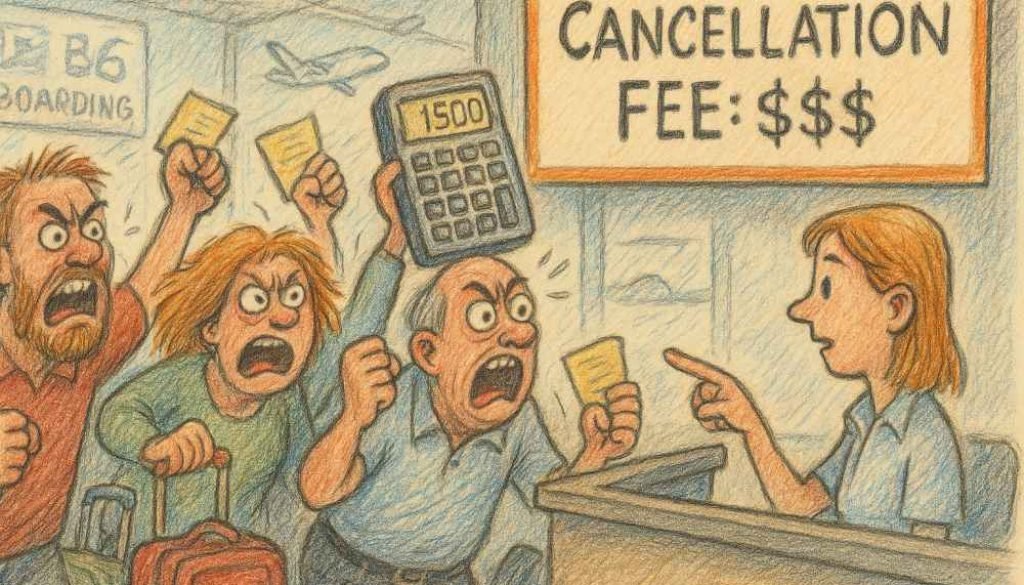
How Much Does It Cost to Cancel a Flight? A Complete Guide to Airline Cancellation Fees
Booked a ticket and suddenly your plans change? You’re not alone. One of the most common traveler questions is: how much does it cost to cancel a flight? The answer isn’t always straightforward — cancellation fees depend on the airline, ticket type, and timing.
This guide breaks down everything you need to know about flight cancellation costs and how to minimize or even avoid them.
How Much Does It Cost to Cancel a Flight?
The cost of canceling a flight varies based on several factors, including your airline’s policies, the ticket class, and how close to departure you cancel. Here’s a general breakdown of what you can expect:
| Airline Type | Typical Cancellation Fee |
|---|---|
| Budget airlines (e.g., Ryanair, Spirit) | $50–$200 (often non-refundable) |
| Major US carriers (Delta, United, American) | $0 for most main cabin fares and higher |
| International airlines (Lufthansa, Emirates, etc.) | $100–$400+ depending on fare class |
| Basic economy (any airline) | Usually non-changeable with no refunds |
| Refundable tickets | $0 (but these cost more upfront) |
Note: Deeply discounted international fares can carry cancellation penalties up to $500, so always read the fare rules before booking.
When You Can Cancel a Flight for Free
Yes — there are scenarios where you won’t have to pay a cancellation fee. Here’s when canceling a flight costs nothing:
1. The 24-Hour Rule (U.S. DOT Regulation)
If you book a flight at least seven days before departure, you can cancel within 24 hours and receive a full refund. This rule applies to any flight to, from, or within the U.S., even for non-refundable tickets.
2. Airline Schedule Changes
If the airline changes your flight time — typically by two hours or more — you’re often entitled to cancel for free or rebook at no additional cost.
3. Remaining COVID Flexibility
Many airlines introduced flexible policies during COVID, and some still allow one free change or cancellation on select fares. Always check the current airline policy before booking
Smart Ways to Reduce or Avoid Flight Cancellation Fees
Learning how to avoid paying high cancellation costs can save you hundreds of dollars. Here are the top strategies:
1. Book with Airlines Offering Flexible Policies
-
U.S. carriers like Delta, United, Alaska, JetBlue, and American Airlines don’t charge cancellation fees on most main cabin and higher fares.
-
Outside the U.S.? Opt for flexible fares and read the terms carefully.
2. Use Travel Insurance
Purchase a policy that includes Cancel for Any Reason (CFAR) coverage if your plans are uncertain.
Premium travel credit cards — like Chase Sapphire Reserve or Amex Platinum — also offer built-in trip cancellation protection.
3. Book with Points or Miles
Award tickets booked with frequent flyer points are often more flexible. You can usually cancel and get your points refunded with little or no penalty.
4. Cancel as Early as Possible
Many airlines charge lower fees if you cancel well in advance. Waiting until the last minute almost always costs more.
5. Call the Airline
Have a valid reason, like illness, family emergencies, or visa issues? Speak with an agent. With the right documentation (and a polite approach), fees can sometimes be reduced or waived.
Pro Tip: Never No-Show
If you simply don’t show up for your flight without canceling, you’ll lose the entire ticket value. Always cancel in advance — even if there’s a penalty — to preserve any credit or rebooking options.
Examples of Flight Cancellation Costs
Here’s what you might pay in real-world scenarios:
| Scenario | Typical Cost |
|---|---|
| Domestic economy flight with Delta | $0 |
| Ryanair international budget ticket | $100–$200 (non-refundable in most cases) |
| Discounted Lufthansa Europe-Asia ticket | $250–$400 |
| Fully refundable first-class fare | $0 |
| Award ticket with points | $0–$75 (depending on airline program) |
Key Takeaways
-
How much it costs to cancel a flight depends on your ticket type, airline, and timing.
-
Basic economy tickets are the most restrictive, often with zero refund options.
-
Use flexible fares, travel insurance, or points to reduce your risk.
-
Always check cancellation policies before you hit “book” — it can save you hundreds later.

March 27, 2026 @ 12:29 am
Whats up very nice website!! Guy .. Excellent
.. Superb .. I’ll bookmark your website and take the feeds additionally?
I’m glad to find so many useful information right here in the publish,
we want develop extra strategies on this regard, thanks
for sharing. . . . . .
Here is my blog: ultimateshop cc
March 27, 2026 @ 12:39 am
Hello, i read your blog occasionally and i own a similar one and i was just curious if you get
a lot of spam responses? If so how do you prevent it, any plugin or anything you can advise?
I get so much lately it’s driving me crazy so any help is very much appreciated.
Here is my blog post – ultimateshop cc
March 27, 2026 @ 1:11 am
I visit each day a few web sites and information sites to read articles, but this web site
provides quality based writing.
Also visit my web-site ultimateshop vc
March 27, 2026 @ 1:11 pm
Hi there! I just wanted to ask if you ever have any problems
with hackers? My last blog (wordpress) was hacked and I ended up losing several weeks of hard work due to
no backup. Do you have any solutions to stop hackers?
My web page: stashpatrick cc
March 28, 2026 @ 1:51 am
Hey there, You’ve done a great job. I will
definitely digg it and personally suggest to my friends.
I am confident they will be benefited from this site.
Here is my site: bankom cc
March 28, 2026 @ 6:39 am
Hi to every one, for the reason that I am actually eager of reading this weblog’s post to be updated daily.
It consists of fastidious data.
Feel free to surf to my site :: infodig